How a 1942 Wage Freeze Accidentally Created Modern Benefits
When Congress froze wages to fight wartime inflation, they never imagined they were creating the employer-sponsored health insurance system that defines American healthcare today.
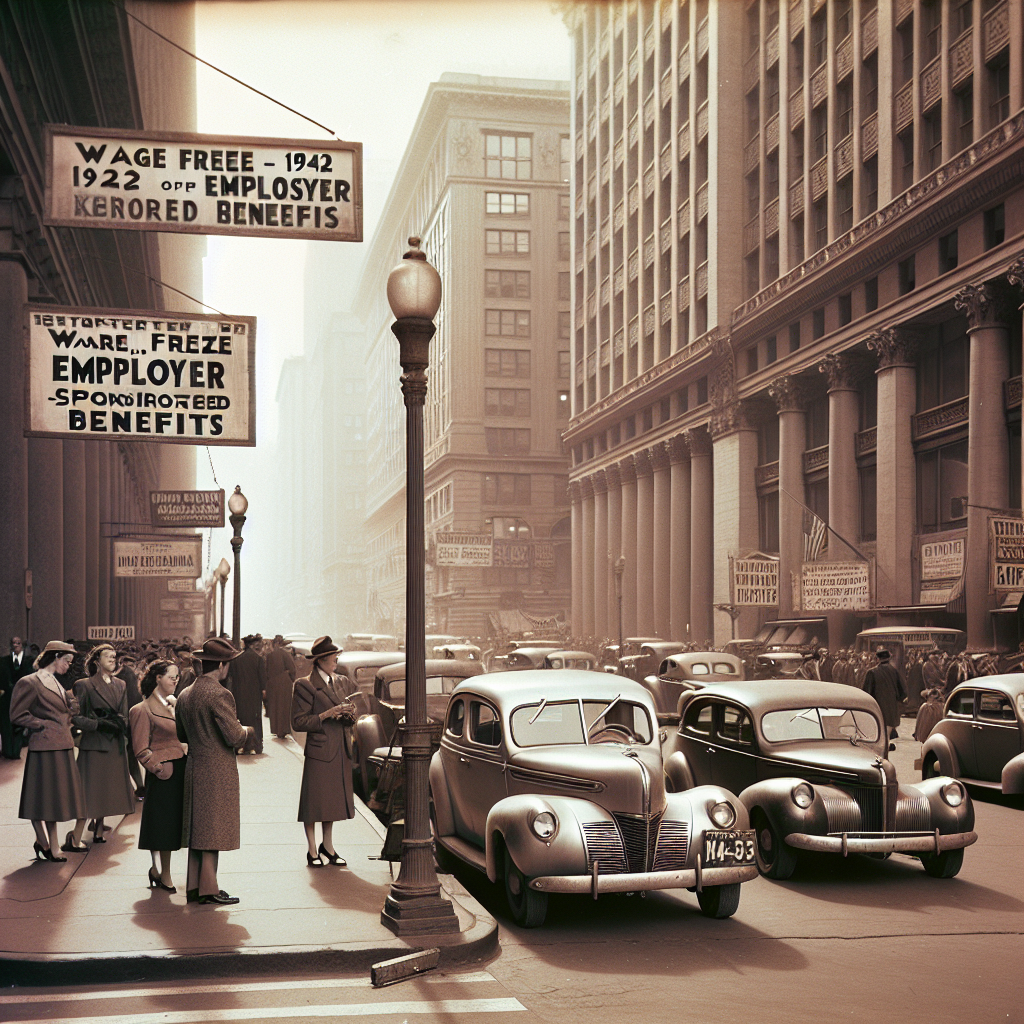
Picture this: It's December 1942, and you're running a factory in Detroit churning out parts for the war effort. The government has just frozen your workers' wages, but you desperately need more skilled laborers. Every other manufacturer in town faces the same dilemma. How do you compete for workers when you can't offer them more money?
This exact scenario played out across America in the winter of 1942, and the creative solutions employers devised would fundamentally reshape how Americans get their healthcare for the next eight decades.
Congress Tries to Tame Wartime Inflation
The Stabilization Act of 1942 wasn't supposed to revolutionize American healthcare—it was supposed to prevent runaway inflation. With unemployment at historic lows and defense spending pumping money into the economy, wages were rising fast. Too fast, Congress worried. They'd watched World War I trigger devastating inflation, and they were determined not to repeat that mistake.
So they froze wages and salaries across the board. No raises, no bonuses, no exceptions. Or so they thought.
The law had what seemed like a minor exemption: fringe benefits like health insurance and pensions didn't count as wages. This wasn't some grand design to transform healthcare—lawmakers barely considered it. These benefits were rare novelties in 1942, offered by only a handful of progressive companies. Most Americans paid their own medical bills out of pocket.
The Great Workaround
But America's employers were nothing if not resourceful. Faced with a red-hot labor market and an inability to raise wages, they seized on that exemption like a life preserver. If they couldn't pay workers more, they'd find other ways to sweeten the deal.
Health insurance became the perfect solution. Workers got valuable coverage they couldn't easily buy on their own, employers got a competitive edge in recruiting, and everyone stayed on the right side of federal wage controls. It was a win-win born of pure necessity.
The transformation happened with stunning speed. Companies that had never offered a single fringe benefit suddenly found themselves in the insurance business. Factory workers who had always paid their own doctor bills now had coverage through their jobs. The tight labor market meant employers had to get creative, and health insurance was their most powerful tool.
When Temporary Became Permanent
Here's what makes this story truly remarkable: everyone assumed these benefits would disappear when the war ended. Wage controls were a wartime emergency measure, and surely compensation would return to normal once the boys came home.
But by 1945, both workers and employers had discovered something unexpected—they liked this arrangement. Workers had grown accustomed to health coverage they didn't have to shop for or pay for directly. Employers found that benefits helped them retain good workers and build loyalty. When wage controls ended, the benefits stayed.
The numbers tell the story of this transformation. In 1940, fewer than one in ten Americans had employer-sponsored health insurance. By 1953, that figure had skyrocketed to 63%. What began as a wartime workaround had become the foundation of American healthcare financing.
The Tax Code Seals the Deal
The final piece of the puzzle came from an unlikely source: the Internal Revenue Service. In 1943, the IRS ruled that employer-paid health insurance premiums weren't taxable income for workers. This wasn't part of some grand healthcare strategy—it was simply a practical decision about how to handle these new benefits that were popping up everywhere.
But that ruling created a powerful economic incentive that persists today. A dollar spent on health insurance was worth more to a worker than a dollar in wages, because the insurance dollar escaped both income and payroll taxes. For employers, it was deductible as a business expense. The tax code had inadvertently subsidized the very system that wage controls had created.
From Wartime Expedient to American Institution
What's fascinating is how completely this wartime accident came to define American healthcare. Other developed countries built their healthcare systems around government programs or regulated markets. America built its around an employment relationship that began as a way to circumvent federal wage controls.
The system that emerged in the 1940s created the healthcare landscape we know today: most Americans get insurance through their jobs, coverage is tied to employment status, and changing jobs often means changing doctors. None of this was planned. It all traces back to that moment in 1942 when Congress froze wages but forgot to freeze benefits.
The irony is striking. A law designed to control wartime inflation accidentally created the world's most expensive healthcare system. A temporary measure to manage the war economy became a permanent feature of American life. And a simple exemption buried in wartime legislation shaped how 300 million Americans get their medical care.
The next time you get health insurance through your job, remember: you're participating in a system that began not with careful policy design, but with desperate employers in 1942 trying to find creative ways around federal wage controls. Sometimes the most profound changes in history happen entirely by accident.