How Congress Created Modern Workplace Safety Standards
In 1970, Congress passed groundbreaking legislation establishing OSHA, transforming workplace safety from a patchwork of local rules to a comprehensive national system protecting 56 million workers.
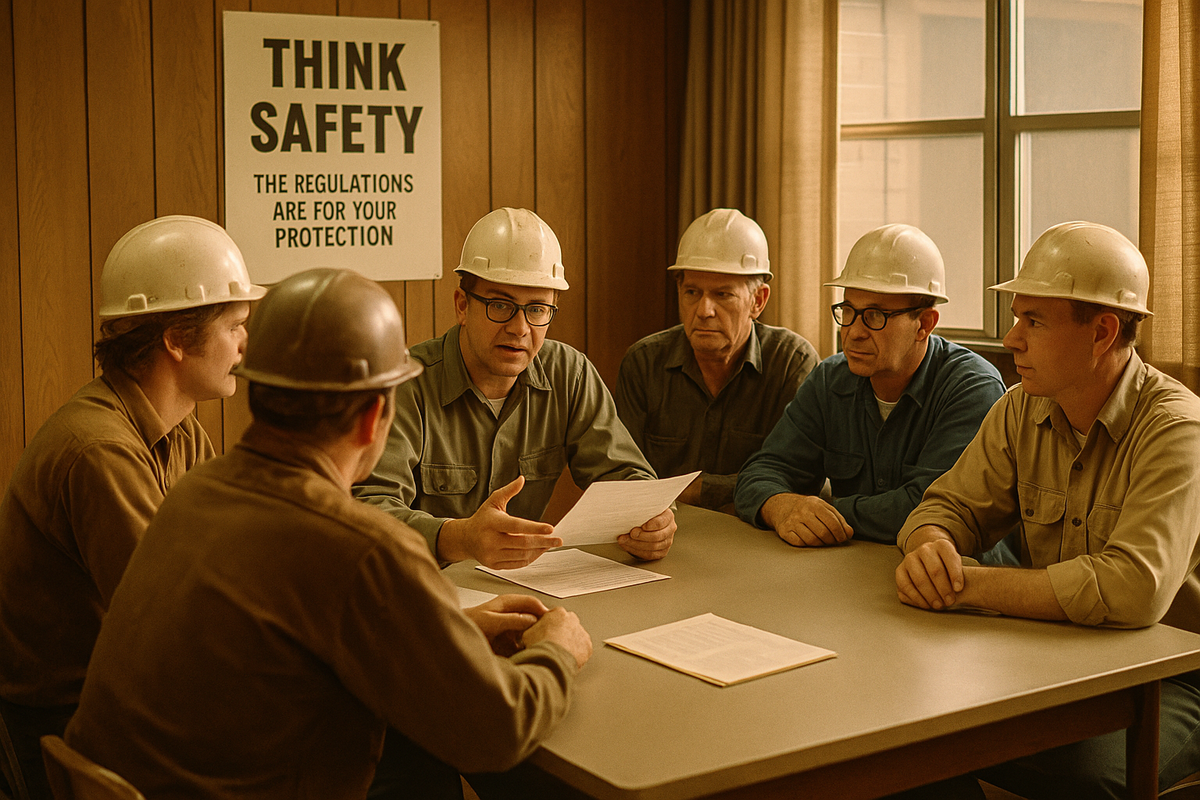
The year was 1970, and American industry was experiencing unprecedented growth and complexity. From the bustling aerospace plants of Long Island to the steel mills of Pittsburgh, millions of workers powered the nation's economic engine. Yet beneath this industrial prosperity lurked a troubling reality: workplace deaths and injuries were reaching crisis levels, with over 14,000 workers killed on the job annually and countless more suffering from occupational diseases and injuries.
On December 29, 1970, President Richard Nixon signed into law a piece of legislation that would fundamentally transform American workplace safety. The Occupational Safety and Health Act created the first comprehensive federal system for protecting worker safety and health, establishing standards that would eventually cover 56 million workers in 7 million workplaces across the nation.
This wasn't just another federal regulation—it was a revolutionary acknowledgment that workplace safety was a national priority requiring coordinated federal action. For the skilled workers building military aircraft at Grumman in Bethpage and Republic Aviation in Farmingdale, along with millions of others in hazardous industries nationwide, this legislation represented nothing less than a fundamental right to return home safely each day.
The Crisis That Demanded Federal Action
By 1970, the patchwork of state and local safety regulations had proven woefully inadequate for addressing the realities of modern industrial work. Workplace safety standards varied dramatically from state to state, creating a confusing maze of conflicting requirements that often provided minimal protection for workers.
The problem was particularly acute in industries that operated across multiple states or involved complex federal contracts. Across Nassau and Suffolk Counties, major aerospace contractors like Grumman Aircraft Corporation and Republic Aviation were working with cutting-edge technologies, hazardous materials, and sophisticated manufacturing processes that required consistent, science-based safety standards.
The existing system created perverse incentives where companies could gain competitive advantages by relocating to states with weaker safety regulations. Workers in high-risk industries faced vastly different levels of protection depending on where they happened to work, rather than on the actual hazards they encountered.
The human cost was staggering. Construction workers fell from buildings without adequate fall protection. Factory workers lost limbs to unguarded machinery. Miners developed black lung disease from prolonged exposure to coal dust. Chemical workers suffered from exposure to toxic substances with no safety limits. The annual toll of 14,000 workplace deaths was equivalent to a major industrial disaster occurring every single day.
Stories emerged from industrial communities across America of preventable tragedies that destroyed families and devastated communities. The existing workers' compensation system provided some financial support after injuries occurred, but it did nothing to prevent the accidents in the first place.
Building Political Momentum for Reform
The push for comprehensive federal workplace safety legislation had been building throughout the 1960s as labor unions, public health advocates, and progressive politicians recognized that the existing system was fundamentally broken. The Department of Labor had been documenting the scope of the workplace safety crisis for years, but lacked the authority to establish binding national standards.
President Nixon, despite his generally conservative approach to federal regulation, recognized that workplace safety represented a legitimate area for federal intervention. The proposal aligned with his philosophy of using federal power to address problems that states couldn't effectively handle on their own, while also demonstrating concern for working-class Americans who formed an important part of his political coalition.
Labor unions strongly supported comprehensive federal safety legislation, seeing it as essential protection for their members. The United Auto Workers, Steelworkers, and other major unions had been negotiating safety provisions in their contracts for years, but recognized that voluntary employer action was insufficient to address the scope of the problem.
Business groups were more cautious, expressing concerns about federal overreach and compliance costs. However, many responsible employers actually welcomed the prospect of uniform national standards that would eliminate the competitive disadvantage they faced when investing in workplace safety while their competitors cut corners.
The Legislative Framework Takes Shape
The final legislation represented a carefully crafted balance between worker protection and business concerns, creating a comprehensive framework that addressed multiple aspects of workplace safety and health. The Occupational Safety and Health Act established several revolutionary principles that transformed American workplace safety:
- Universal coverage: Nearly all private sector employers would be subject to federal safety and health standards
- Science-based standards: Safety regulations would be based on the best available scientific evidence rather than political compromise
- Federal enforcement: A new federal agency would have the power to inspect workplaces and issue citations for safety violations
- Worker rights: Employees gained the right to file complaints, request inspections, and receive information about workplace hazards
- Employer responsibility: Companies became legally obligated to provide safe and healthful working conditions
The legislation created the Occupational Safety and Health Administration (OSHA) within the Department of Labor to develop and enforce safety standards, while also establishing the National Institute for Occupational Safety and Health (NIOSH) to conduct research and recommend new safety measures.
Immediate Impact on Long Island's Industrial Base
The implementation of OSHA had immediate and profound effects on Long Island's major employers and their workforces. The aerospace and defense industries that dominated Nassau and Suffolk Counties employment were particularly affected, as these companies worked with hazardous materials, complex machinery, and cutting-edge technologies that required sophisticated safety management.
At Grumman Aircraft, where thousands of skilled workers assembled military aircraft using advanced composites and toxic chemicals, OSHA standards provided a comprehensive framework for managing workplace hazards. The company had to implement new safety training programs, install engineering controls to reduce chemical exposures, and establish systematic approaches to hazard identification and control.
Republic Aviation and other Long Island manufacturers found that OSHA compliance required significant investments in safety equipment, training programs, and administrative systems. While these costs were substantial, many companies discovered that systematic safety management actually improved productivity by reducing accidents, equipment damage, and work disruptions.
The legislation also supported the development of safety expertise and services across the region. As companies needed help understanding and complying with OSHA standards, new businesses emerged to provide safety consulting, training, and equipment. This created employment opportunities in the growing occupational safety and health field while improving overall safety performance.
The Transformation of Workplace Safety Culture
What emerged from the 1970 legislation was far more than just a new set of regulations—it was a fundamental transformation in how American society thought about workplace safety. OSHA established the principle that workplace safety wasn't just a matter of individual responsibility or voluntary employer action, but a basic right that deserved federal protection.
The law introduced several concepts that revolutionized workplace safety management:
- Systematic hazard identification: Employers became required to identify and assess workplace hazards rather than simply reacting to accidents after they occurred
- Engineering controls: The law emphasized eliminating hazards at their source rather than relying solely on protective equipment
- Worker participation: Employees gained legal rights to participate in safety programs and report hazards without fear of retaliation
- Continuous improvement: Safety became an ongoing management responsibility rather than a one-time compliance exercise
These principles represented a fundamental shift from safety as an afterthought to safety as an integral part of business operations. Companies that embraced this transformation often found that systematic safety management improved their overall operational efficiency and employee relations.
Long-term Impact on American Industry
The creation of OSHA marked the beginning of a dramatic improvement in American workplace safety. Over the following decades, workplace fatality rates declined by more than 60%, while injury and illness rates fell even more dramatically. The transformation of American workplace safety became one of the most successful public health achievements of the late 20th century.
The legislation also established important precedents for federal involvement in workplace regulation and demonstrated the feasibility of science-based safety standards. The success of OSHA influenced subsequent legislation addressing workplace hazards, environmental protection, and consumer safety.
For Long Island employers, OSHA's evolution demonstrated how comprehensive safety management could support business success while protecting workers. Companies that invested in safety training, hazard control, and employee engagement often saw returns in terms of reduced insurance costs, improved productivity, and enhanced reputation.
Modern Relevance for Today's Employers
Today's Long Island employers continue to operate within the framework established by the 1970 Occupational Safety and Health Act, though the specific requirements have evolved significantly to address new workplace hazards and changing work environments. Modern businesses across Nassau and Suffolk Counties must navigate NY Labor Laws and Workers' Compensation Compliance requirements that build upon OSHA's foundational principles.
The law's emphasis on systematic hazard identification and control remains central to effective safety management. Companies that proactively identify and address workplace hazards often prevent costly accidents while demonstrating compliance with regulatory requirements.
OSHA's focus on worker participation and training has evolved into comprehensive safety culture programs that engage employees at all levels. Modern employers find that workers who understand safety requirements and feel empowered to report hazards contribute significantly to overall safety performance.
The legislation's science-based approach to standard-setting continues to influence how companies evaluate new workplace hazards and technologies. As work environments evolve with automation, remote work, and new materials, the principles established in 1970 provide a framework for addressing emerging safety challenges.
Lessons for Today's Business Leaders
The story of OSHA's creation offers valuable insights for contemporary business leaders navigating workplace safety and regulatory compliance challenges. The legislation's success demonstrates how comprehensive worker protections can actually support business interests when properly implemented and managed.
The law's emphasis on systematic management approaches provides a model for modern safety programs that go beyond minimum compliance requirements. Companies that integrate safety considerations into their overall business strategy often find competitive advantages in their ability to attract skilled workers, reduce operational costs, and maintain productive workplaces.
OSHA's focus on continuous improvement illustrates the importance of viewing safety as an ongoing process rather than a static compliance exercise. Employers who regularly assess and update their safety programs often stay ahead of regulatory changes while maintaining effective hazard control.
The legislation's success in reducing workplace injuries and fatalities also demonstrates the value of long-term thinking in safety investment. While compliance costs may seem significant in the short term, the long-term benefits of preventing accidents typically far exceed the initial investment.
For today's Long Island employers, the 1970 revolution's history suggests that embracing comprehensive safety management creates value for all stakeholders. Companies that go beyond minimum compliance often find that their safety programs support broader business objectives including employee retention, operational efficiency, and community reputation.
Building on OSHA's Foundation
As Nassau and Suffolk Counties continue to evolve economically, with new industries emerging alongside traditional aerospace and manufacturing employers, the principles established in 1970 remain highly relevant. The emphasis on systematic hazard identification, science-based standards, and worker participation provides a framework for addressing contemporary workplace safety challenges.
Modern workplace safety issues—from ergonomic hazards in office environments to mental health challenges in high-stress jobs—require the same systematic thinking that created OSHA. The most successful approaches often combine regulatory compliance with proactive investment in worker well-being and safety culture development.
The OSHA model also demonstrates the value of comprehensive, coordinated approaches to complex social problems. Rather than addressing workplace safety through piecemeal reforms, the 1970 legislation created a complete framework that addressed standard-setting, enforcement, research, and worker rights within a single coordinated system.
Today's employers can apply similar systematic thinking to contemporary challenges like workplace wellness, employee engagement, and skills development. The most effective programs often integrate multiple elements—from safety training to health promotion to career development—into comprehensive approaches that support both worker well-being and business success.
The historical success of OSHA also illustrates the importance of viewing regulatory compliance as a foundation for excellence rather than a ceiling for performance. Companies that use OSHA standards as a starting point for developing superior safety programs often achieve better results than those that aim only for minimum compliance.
Ready to build on OSHA's strong foundation by developing comprehensive workplace safety and employee protection programs that exceed regulatory requirements? Contact Benton Oakfield today to discuss how expert guidance can help you develop effective HR strategy and workplace safety policies that protect your workers, reduce risks, and support your business objectives in today's competitive Long Island market.
This article is for informational purposes only and does not constitute legal or tax advice. Consult with qualified professionals for guidance specific to your situation.