How Workers' Compensation Transformed American Labor
In 1911, Wisconsin pioneered the first comprehensive workers' compensation law, creating a revolutionary system that protected millions of industrial workers from economic devastation after workplace injuries.
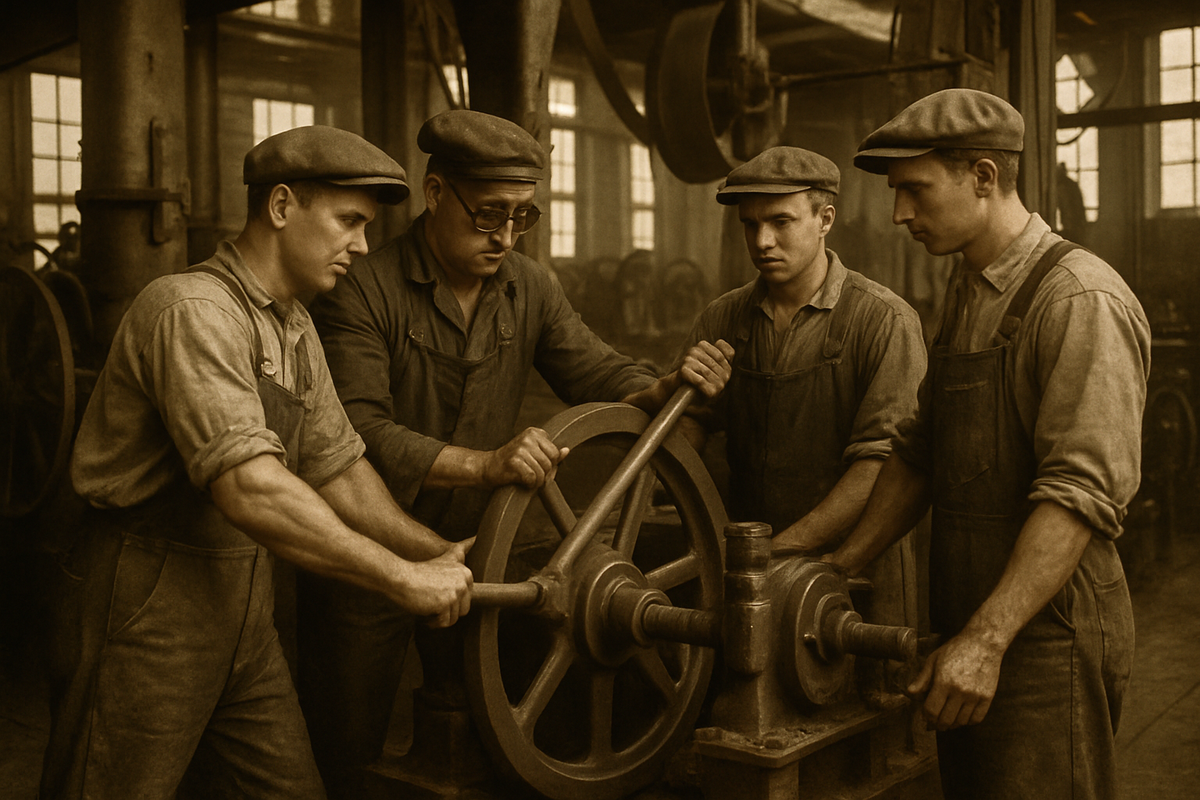
Picture this: It's 1910, and the American industrial revolution is in full swing. Factory floors across the nation hum with the sounds of progress—steam-powered machinery, the clatter of assembly lines, and the determined voices of workers building the modern world. But beneath this veneer of prosperity lurked a darker reality: workplace injuries were devastatingly common, and when workers were hurt, they faced not just physical pain but complete economic ruin.
In the bustling industrial centers of America, from the steel mills of Pittsburgh to the emerging aerospace plants that would soon dot Long Island, workers lived with a terrifying truth. A single workplace accident could instantly transform a productive life into one of poverty and desperation. The legal system offered little recourse, and employer responsibility was minimal at best.
Then, on May 3, 1911, Wisconsin Governor Francis McGovern signed into law a revolutionary piece of legislation that would fundamentally transform the relationship between American workers and their employers. The Wisconsin Workers' Compensation Act created the first comprehensive no-fault insurance system for workplace injuries, establishing principles that would eventually protect millions of workers and reshape labor relations across the nation.
The Brutal Reality of Industrial America
Before 1911, American workers faced workplace dangers with virtually no safety net. The rapid industrialization of the late 19th and early 20th centuries had created unprecedented opportunities for employment, but it had also generated workplace hazards on a scale never before seen in human history.
Factory workers operated dangerous machinery without safety guards. Construction workers built skyscrapers without hard hats or safety harnesses. Railroad employees worked with primitive coupling systems that regularly crushed hands and arms. Mining operations sent workers deep underground with minimal safety equipment and poor ventilation.
When accidents occurred—and they occurred with alarming frequency—injured workers had few options for recovery. The legal system of the era placed the burden of proof entirely on the worker to demonstrate that their employer had been negligent. Even when negligence could be proven, employers had powerful legal defenses that often left injured workers with nothing.
The "fellow servant rule" held that employers weren't liable for injuries caused by the negligence of co-workers. The "assumption of risk" doctrine argued that workers had voluntarily accepted the dangers of their jobs. The "contributory negligence" principle meant that any worker mistake, however minor, could eliminate employer liability entirely.
The result was a system that left injured workers and their families facing financial devastation precisely when they were least able to cope with economic hardship. Families lost their homes, children were forced to leave school and work, and disabled workers often ended up in poorhouses or on the streets.
Early Attempts at Reform
The first attempts to address this crisis came through Employers' Liability Laws, beginning with legislation passed in 1871. These laws attempted to modify the harsh common law rules that protected employers from injury claims, but they provided only limited relief and still required workers to prove employer negligence in court.
By 1908, the federal government had begun to recognize the scope of the problem. Congress passed the Federal Employers' Liability Act, which provided some protections for civilian employees working in hazardous government jobs. While this was a step forward, it covered only a tiny fraction of American workers and still relied on the adversarial court system to resolve injury claims.
Progressive reformers and labor advocates recognized that piecemeal liability reforms weren't sufficient to address the fundamental problems with workplace injury compensation. What was needed was a completely different approach—one that would provide swift, certain benefits to injured workers while creating incentives for employers to improve workplace safety.
Wisconsin Leads the Way
The breakthrough came from an unlikely combination of progressive politics, practical business concerns, and innovative thinking about social insurance. Wisconsin had emerged as a leader in progressive reform under the leadership of Governor Robert La Follette, and the state's political culture was receptive to bold experiments in social policy.
The key insight was elegantly simple: rather than forcing injured workers to prove employer negligence in court, why not create a system where employers would automatically provide benefits for workplace injuries, regardless of fault? This "no-fault" approach would eliminate the lengthy legal battles that often left injured workers waiting years for compensation, while also providing employers with predictable costs and protection from unlimited liability.
The Wisconsin law established several revolutionary principles that would become the foundation of modern workers' compensation:
- Automatic coverage: All workplace injuries would be covered, regardless of who was at fault
- Prompt benefits: Injured workers would receive immediate medical care and wage replacement
- Limited liability: Employers would pay prescribed benefits but be protected from additional lawsuits
- Mandatory participation: All employers in covered industries would be required to provide workers' compensation insurance
The legislation represented a grand compromise between labor and business interests. Workers gained certainty of compensation and prompt payment, while employers gained protection from unpredictable jury awards and costly litigation.
The Rapid Spread of Reform
Wisconsin's success with workers' compensation created a powerful demonstration effect that influenced policy makers across the nation. Within just a few years, other states began adopting similar laws, each building on Wisconsin's model while adapting to local conditions and political realities.
The spread of workers' compensation was remarkably rapid by the standards of social policy reform. By 1920, all but six states had adopted some form of workers' compensation law. The holdout states—primarily in the South—gradually came into the system over the following decades, with Mississippi becoming the final state to adopt workers' compensation in 1948.
This rapid adoption reflected the compelling logic of the Wisconsin model. Employers discovered that workers' compensation actually reduced their overall costs compared to the unpredictable liability system it replaced. Workers appreciated the security of knowing that workplace injuries wouldn't mean economic catastrophe. Insurance companies found profitable new markets in providing workers' compensation coverage.
Impact on Long Island's Emerging Industries
The transformation to workers' compensation had particular significance for Long Island's developing industrial base. As the region began attracting major employers like Grumman Aircraft Corporation and Republic Aviation, the availability of comprehensive workers' compensation coverage became a crucial factor in supporting industrial growth.
The aerospace and defense industries that would eventually dominate Nassau and Suffolk Counties employment involved inherently dangerous work. Aircraft manufacturing required workers to handle hazardous materials, operate complex machinery, and work at dangerous heights. The precision required in aerospace production meant that even small accidents could have serious consequences.
Workers' compensation provided the foundation for Long Island's industrial expansion by creating a stable framework for managing workplace injury risks. Employers could budget for predictable insurance costs rather than facing the uncertainty of potential litigation. Workers could commit to careers in demanding industries knowing that their families would be protected if accidents occurred.
The system also supported the development of specialized medical care and rehabilitation services across the region. As workers' compensation created demand for prompt, effective treatment of workplace injuries, healthcare providers developed expertise in occupational medicine and injury rehabilitation that benefited the entire community.
The Modern Legacy
Today's workers' compensation system bears clear traces of the revolutionary principles established in Wisconsin over a century ago. While the details have evolved significantly—with expanded coverage, improved benefits, and sophisticated safety incentives—the fundamental concept remains unchanged: employers have a responsibility to protect workers from the economic consequences of workplace injuries.
For Long Island employers today, this history provides important context for understanding modern NY Labor Laws and Workers' Compensation Compliance requirements. The no-fault principles that seemed radical in 1911 are now fundamental assumptions underlying workplace safety and injury compensation systems.
The emphasis on safety incentives that was built into early workers' compensation laws has evolved into comprehensive safety management programs that benefit both workers and employers. Companies that invest in workplace safety often see reduced workers' compensation premiums, improved productivity, and enhanced employee satisfaction.
Modern workers' compensation also reflects the continuing evolution of work itself. Coverage has expanded to include occupational diseases, repetitive stress injuries, and other conditions that weren't recognized in 1911. The system has adapted to address the needs of a more diverse workforce and the challenges of a more complex economy.
Lessons for Today's Business Leaders
The story of workers' compensation's origins offers valuable insights for contemporary business leaders navigating workplace safety and employee protection challenges. The Wisconsin model's success demonstrates how comprehensive worker protections can actually support business interests when properly designed and implemented.
The legislation's emphasis on predictability and mutual benefit provides a model for modern approaches to workplace safety and employee relations. Just as workers' compensation replaced an adversarial legal system with a cooperative insurance model, today's most successful safety programs emphasize collaboration between employers and workers rather than top-down mandates.
The rapid adoption of workers' compensation across all states also illustrates how effective social policies can transcend political divisions when they address genuine problems with practical solutions. Modern employers can apply similar principles when evaluating workplace safety initiatives or employee benefit programs.
For today's Long Island employers, the 1911 revolution's history suggests that investing in comprehensive worker protection creates value for all stakeholders. Companies that go beyond minimum compliance requirements often find competitive advantages in their ability to attract skilled workers, reduce turnover, and maintain productive workplaces.
The legislation's focus on incentivizing safety improvements rather than simply compensating injuries provides a framework for modern safety management. Employers who work proactively to prevent workplace injuries often see returns that extend far beyond reduced workers' compensation costs.
Building on Historical Foundations
As Nassau and Suffolk Counties continue to evolve economically, with new industries emerging alongside traditional aerospace and manufacturing employers, the principles established in 1911 remain relevant. The emphasis on employer responsibility, worker protection, and mutual benefit provides a foundation for addressing contemporary workplace challenges.
Modern workplace safety issues—from ergonomic injuries in office settings to mental health challenges in high-stress environments—require the same innovative thinking that created workers' compensation. The most successful approaches often combine regulatory compliance with proactive investment in worker well-being.
The workers' compensation model also demonstrates the value of comprehensive, systematic approaches to complex social problems. Rather than addressing workplace injuries through piecemeal reforms, Wisconsin's leaders created a complete framework that addressed the needs of all stakeholders while establishing sustainable financing mechanisms.
Today's employers can apply similar systematic thinking to contemporary challenges like workplace wellness, employee retention, and skills development. The most effective programs often integrate multiple elements—from safety training to health promotion to career development—into comprehensive approaches that support both worker well-being and business success.
The historical success of workers' compensation also illustrates the importance of long-term thinking in policy development. What began as a response to immediate crisis has evolved into a foundational element of American labor relations, demonstrating how thoughtful policy design can create lasting value for multiple generations.
Ready to build on this strong historical foundation by ensuring your Long Island business maintains comprehensive workplace safety and employee protection programs? Contact Benton Oakfield today to discuss how expert guidance can help you develop effective HR strategy and workplace safety policies that protect your workers, reduce risks, and support your business objectives in today's competitive market.
This article is for informational purposes only and does not constitute legal or tax advice. Consult with qualified professionals for guidance specific to your situation.