How World War II Accidentally Created American Health Insurance
A 1942 wartime wage freeze led employers to offer health benefits instead of raises, inadvertently launching the employer-sponsored insurance system we know today.
Picture this: it's September 1942, and America is deep into World War II. Factory workers are desperately needed to fuel the war machine, but there's a problem. President Roosevelt has just frozen all wages at their September 15th levels, and employers can't offer higher salaries to attract the workers they need. What happened next would accidentally create the foundation of American healthcare as we know it today.
The Stabilization Act of 1942 was born out of wartime necessity, not healthcare policy. As inflation threatened to spiral out of control during the war, Roosevelt needed dramatic action to keep the economy stable while resources poured into the military effort. The Act gave him sweeping powers to freeze prices, wages, and salaries across the entire economy, with serious consequences for violators: fines up to $1,000 and up to a year in prison.
When Wages Freeze, Creativity Flows
But here's where the story gets interesting. American ingenuity didn't stop at the factory floor—it extended to the HR department. Faced with a booming wartime economy and a desperate need for workers, employers found themselves in a bind. They couldn't offer more money, but they could get creative with benefits.
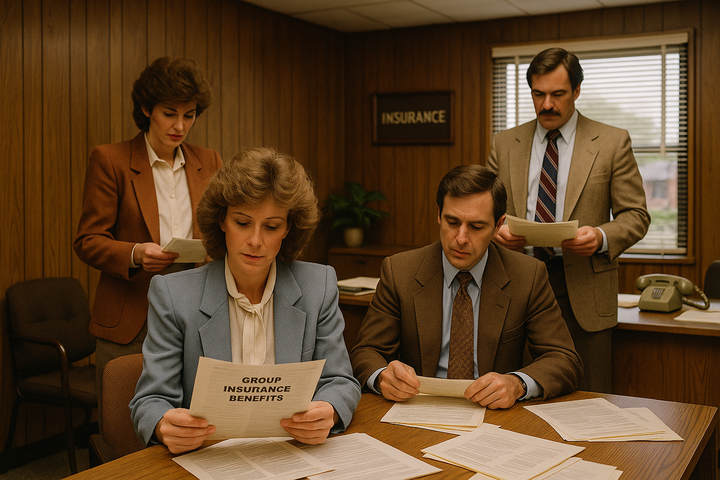
Enter health insurance. What had previously been a rare perk offered by only the most progressive companies suddenly became a competitive necessity. Since the wage controls didn't apply to fringe benefits, employers began offering health insurance packages to attract and retain workers. It was a brilliant workaround that nobody saw coming.
The timing couldn't have been more perfect. Blue Cross and Blue Shield plans had been growing slowly throughout the 1930s, but they were still relatively niche products. The war changed everything. Suddenly, millions of American workers were getting their first taste of employer-sponsored health coverage, not because of some grand policy vision, but because of an economic loophole.
The Ripple Effect Nobody Predicted
What makes this story so fascinating is how completely unintentional it was. The lawmakers who crafted the Stabilization Act were thinking about inflation and war production, not revolutionizing American healthcare. They certainly weren't trying to create a system where your job determines your access to medical care.
The Act also extended the Emergency Price Control Act by a year, showing just how comprehensive the government's wartime economic intervention had become. This wasn't just about wages—it was about controlling every aspect of the economy to support the war effort. Health insurance was simply collateral creativity.
Consider the irony: in trying to control the economy, the government inadvertently created one of the most market-driven healthcare systems in the world. By preventing direct wage competition, they forced employers to compete on benefits instead, launching what would become a massive private insurance industry.
The Wartime Experiment That Never Ended
As the war progressed, this arrangement became more entrenched. Workers grew accustomed to receiving health benefits through their employers. Companies discovered that offering good benefits helped them attract better employees. Insurance companies found a goldmine in group policies that spread risk across large employee populations.
The really remarkable thing is how quickly this became the new normal. By 1945, millions of Americans had employer-sponsored health insurance—a concept that had barely existed five years earlier. What started as a wartime workaround was rapidly becoming the American way.
Labor unions, initially focused on wage increases, began negotiating for better health benefits instead. This further cemented the connection between employment and healthcare, creating a feedback loop that would define American medicine for decades to come.
From Wartime Necessity to Modern Reality
When we look at American healthcare today, we're still living with the consequences of that September day in 1942. The employer-sponsored insurance system that covers over 150 million Americans didn't emerge from careful policy planning or philosophical debates about healthcare delivery. It emerged from a wartime wage freeze and some creative thinking by employers who needed workers.
This historical accident helps explain some of the unique quirks of American healthcare that puzzle observers from other countries. Why do Americans lose their health insurance when they lose their jobs? Why is American healthcare so tied to employment status? The answer traces back to those wartime decisions made in the heat of global conflict.
The Stabilization Act was repealed after the war, but its most important legacy lived on. By the time normal wage competition resumed, the employer-sponsored insurance model was too established to abandon. What had been an emergency measure became a permanent feature of American life.
It's one of those perfect examples of how history rarely unfolds according to plan. The architects of modern American healthcare weren't healthcare reformers or insurance executives—they were wartime economic planners trying to control inflation. Sometimes the most lasting changes come from the most unexpected places.