How World War II Shipyards Created Modern American Healthcare
In 1940s shipyards, Henry Kaiser accidentally invented the healthcare model that would reshape American medicine—proving that wartime innovation extends far beyond weapons.
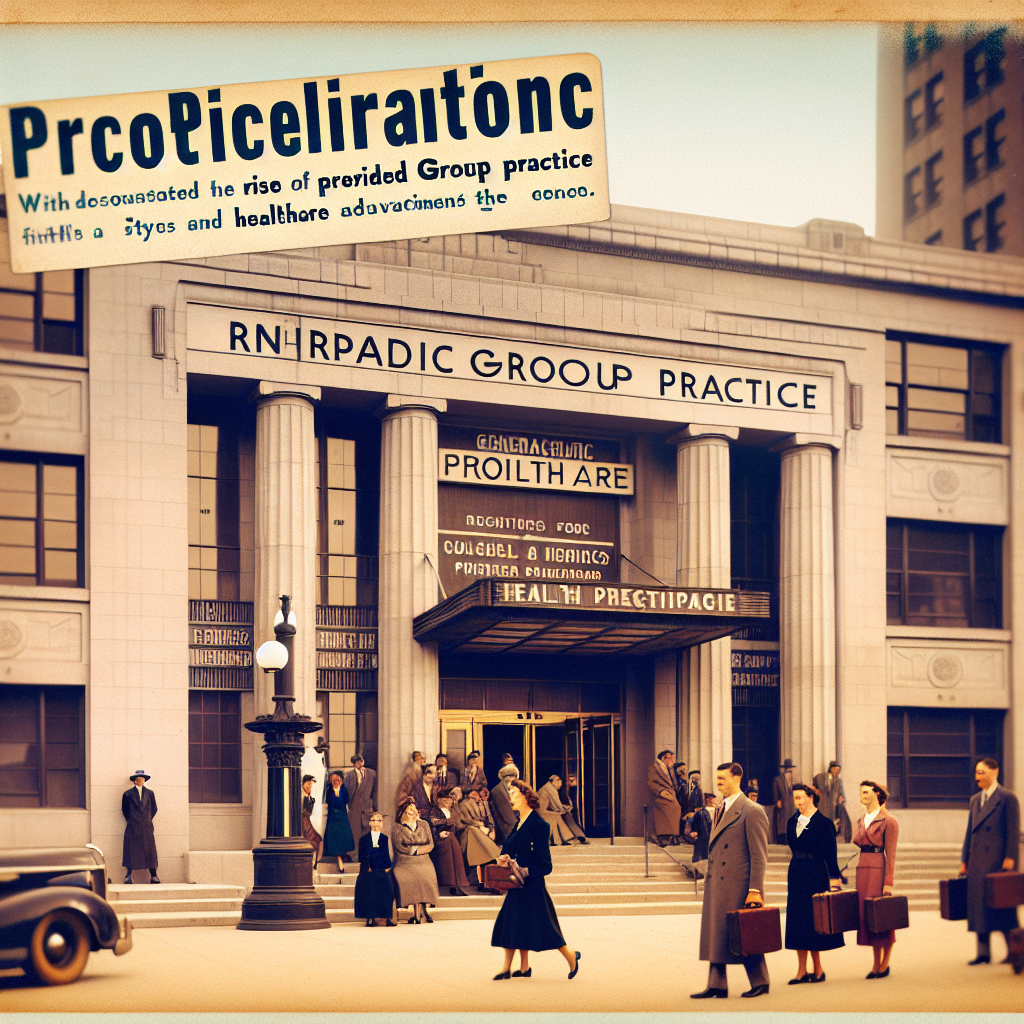
Picture this: It's 1942, and Henry Kaiser has a problem. He's building Liberty ships for the war effort at breakneck speed, but his workers keep getting hurt or sick. Traditional insurance companies won't touch his massive, dangerous shipyards. So Kaiser does what any industrialist would do—he hires his own doctors and builds his own hospitals. What happened next would accidentally revolutionize American healthcare.
Kaiser didn't set out to transform medicine. He was a construction magnate who'd built dams, roads, and bridges across the West. But World War II thrust him into shipbuilding, and suddenly he employed over 200,000 workers in Richmond, California, and Portland, Oregon. These weren't desk jobs—welding, heavy machinery, and round-the-clock shifts created constant medical emergencies.
The Garfield Experiment
The genius behind Kaiser's healthcare revolution was Dr. Sidney Garfield, a young physician who'd already experimented with prepaid medicine in the 1930s. While treating construction workers on Kaiser's Grand Coulee Dam project, Garfield had discovered something radical: if workers paid a small amount upfront, he could provide better care more efficiently than the traditional fee-for-service model.
When Kaiser's shipyard workers began flooding local hospitals, Garfield proposed expanding this prepaid concept. For about 50 cents per week—deducted directly from paychecks—workers would receive complete medical care from Kaiser's own doctors and hospitals. No bills, no insurance hassles, no wondering if they could afford treatment.
The timing was perfect. Traditional insurance barely covered medical care in the 1940s, focusing mainly on income replacement during illness. Most Americans paid doctors and hospitals out of pocket, often going without care they couldn't afford. Kaiser's prepaid plan covered everything: doctor visits, surgeries, hospital stays, even preventive care.
Wartime Innovation Under Fire
The medical establishment was horrified. The American Medical Association condemned prepaid group practice as 'socialized medicine,' arguing it would destroy the sacred doctor-patient relationship. Local medical societies tried to ban Kaiser's doctors from practicing. Hospitals refused to admit Kaiser patients.
But Kaiser had advantages his critics lacked. He built his own hospitals—modern, efficient facilities designed around the prepaid model. His doctors worked as salaried employees rather than independent practitioners, allowing for coordinated care and shared resources. Most importantly, he had a captive audience of workers who desperately needed affordable healthcare.
The results spoke for themselves. Kaiser's medical program reduced workplace injuries, kept workers healthier, and cost less than traditional insurance. During the war, when every able body was needed for production, this efficiency became a patriotic duty. What had started as a business necessity was proving itself as a superior healthcare model.
Beyond the Shipyards
As the war ended, Kaiser faced another challenge: what to do with this massive healthcare infrastructure when shipyard employment plummeted? The answer was to open enrollment to the public. In 1945, Kaiser Permanente (named after the Permanente River near one of his cement plants) began accepting non-Kaiser employees.
This transition wasn't smooth. Many doctors left when they realized Kaiser intended to continue the prepaid model permanently. The AMA intensified its opposition, and some states tried to ban prepaid group practice entirely. But Kaiser had proven something important: Americans would embrace 'socialized medicine' if it meant better, more affordable care.
The 1940s also saw Kaiser innovate in ways that seem obvious today but were revolutionary then. Preventive care, coordinated treatment between specialists, shared medical records, and emphasis on keeping people healthy rather than just treating illness—these concepts emerged from the practical needs of managing healthcare for hundreds of thousands of workers.
The Accidental Revolution
What makes Kaiser's story fascinating is how accidental it was. He wasn't trying to reform American healthcare—he was trying to build ships faster. The prepaid group practice model emerged from wartime necessity, not ideological conviction. Yet this pragmatic approach created something the medical establishment's theoretical objections couldn't destroy: a system that actually worked.
By 1950, Kaiser Permanente covered over 300,000 people across California, Oregon, and Washington. The integrated care model—where doctors, hospitals, and insurance were all part of the same organization—had proven its viability. Other employers began copying Kaiser's approach, leading to the HMO movement of the 1970s and beyond.
The irony is delicious: while politicians debated national health insurance and doctors defended fee-for-service medicine, an industrialist accidentally created the template for modern managed care. Kaiser's wartime experiment became the foundation for how millions of Americans receive healthcare today.
Looking back, it's remarkable how one man's shipyard problem reshaped American medicine. Kaiser Permanente proved that healthcare could be both comprehensive and affordable, that prevention was cheaper than treatment, and that Americans would accept 'socialized medicine' if it delivered results. The 1940s healthcare revolution didn't come from Washington or medical schools—it came from the practical needs of building ships for democracy.