NY Sexual Harassment Training Now Includes Assault & Discrimination
Starting January 1, 2026, NY law expands sexual harassment training to include sexual assault and discrimination. All employers with 1+ employee must provide interactive training annually. Non-compliance risks significant penalties and increased litigation liability.
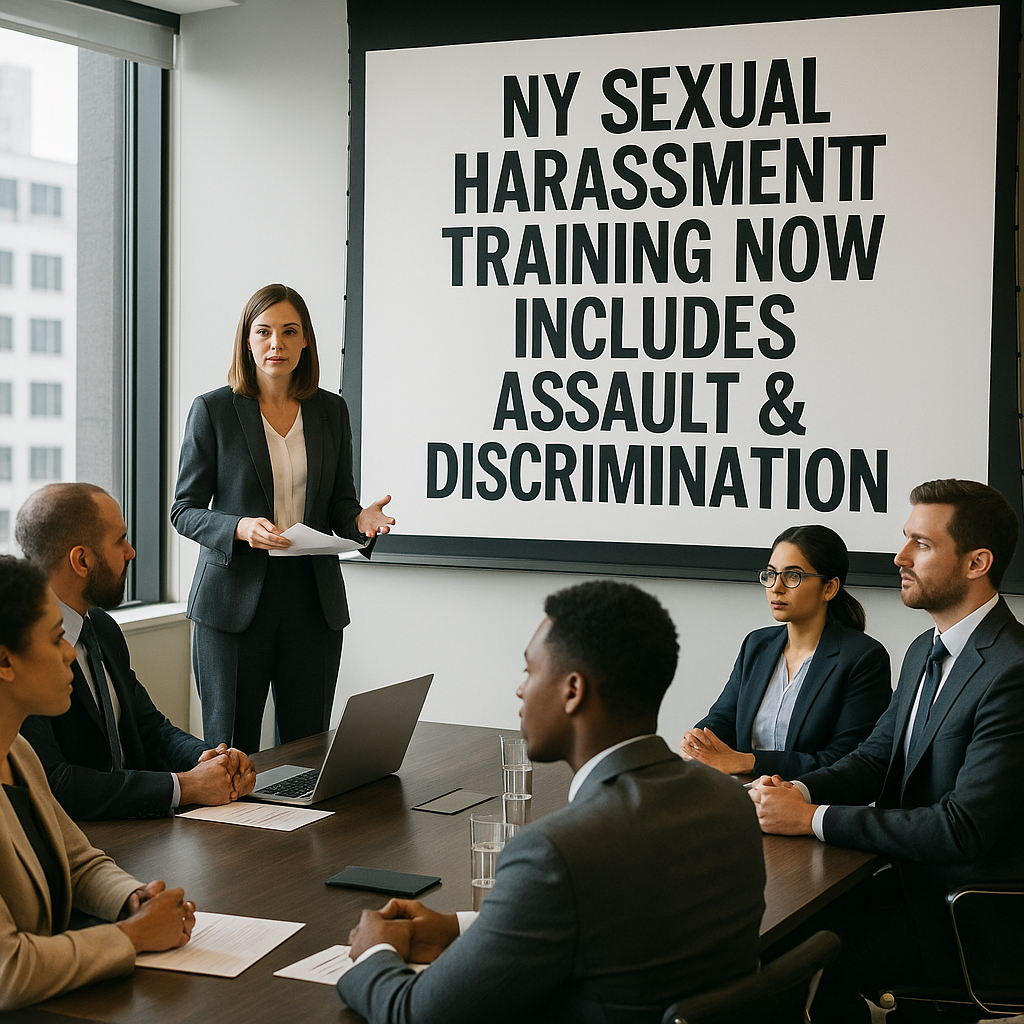
New York expanded its sexual harassment prevention training requirements on January 1, 2026, adding sexual assault and discrimination to the mandatory curriculum. All employers with one or more employees must now provide interactive annual training covering all three topics, with documented compliance required for every worker including new hires.
The expanded requirements affect every Nassau and Suffolk County business regardless of size. A single-employee consulting practice has the same training obligations as a 200-person medical group. For Long Island employers, this means reviewing current training programs to ensure they meet the new standards and implementing documentation systems that can withstand regulatory scrutiny.
According to the New York State Department of Labor, the previous focus on sexual harassment alone was insufficient. The 2026 expansion requires employers to address the broader spectrum of workplace misconduct, including sexual assault and discrimination based on protected characteristics.
What Changed on January 1, 2026
The most significant change is scope. While previous training could focus primarily on sexual harassment prevention, the new requirements explicitly mandate coverage of sexual assault and sexual discrimination. Training materials that don't address all three topics fail to meet minimum compliance standards.
Interactive training remains mandatory - passive video-only programs don't satisfy the requirement. Employers must use webinars, in-person sessions, or approved online modules that include participant engagement elements. The training must occur both at time of hiring and during annual refresher sessions for all existing employees.
Documentation requirements have also strengthened. Employers must maintain records proving that training was provided to each employee, including dates, content covered, and completion verification. These records become critical evidence in any harassment-related litigation or regulatory investigation.
For businesses with operations in both Nassau/Suffolk Counties and New York City, additional NYC requirements create a second layer of compliance obligations beyond state law.
Compliance Costs and Liability Exposure
The financial impact varies significantly based on implementation approach. Employers using New York State's free model training materials face only the time cost of conducting sessions - typically 2-4 hours annually for small businesses. However, many Long Island employers require professional guidance on NY labor law compliance to ensure their training meets all applicable requirements.
Third-party training vendors typically charge $25-75 per employee annually, but employers must verify that vendor content meets the expanded 2026 standards. Using non-compliant training creates the same liability exposure as providing no training at all.
Non-compliance risks extend beyond regulatory penalties. Employers without documented training face significantly higher settlement costs in harassment cases, as the lack of prevention training suggests negligence. Employment attorneys report that proper training documentation can reduce settlement exposure by 40-60% in harassment claims.
Professional service firms, medical practices, and accounting offices across Long Island face particular vulnerability because they often have limited HR infrastructure to manage compliance documentation and policy updates.
Implementation Requirements for Long Island Employers
Every employer must adopt and distribute a written sexual harassment prevention policy that addresses harassment, assault, and discrimination. The policy must be provided to employees at hiring and during each annual training session.
Training must cover specific elements:
- Sexual harassment prevention: Definition, examples, and reporting procedures
- Sexual assault awareness: Recognition, prevention, and response protocols
- Discrimination prevention: Protected characteristics and prohibited conduct
- Reporting mechanisms: Internal and external complaint procedures
- Retaliation protection: Legal protections for employees who report misconduct
New employees must receive training within 30 days of hire. Annual refresher training applies to all employees, not just supervisors or management. Employers must maintain documentation proving compliance for potential audit or litigation defense.
Practical Implementation Options
New York State provides free model training materials and policies that employers can download and customize. These materials meet minimum compliance requirements and include documentation templates for tracking completion.
However, many successful Long Island businesses invest in enhanced training programs that exceed minimum requirements. This approach provides stronger litigation defense and often improves workplace culture more effectively than basic compliance training.
For businesses needing customized approaches, working with experienced providers who understand compliant sexual harassment prevention policies and training programs ensures that training materials address industry-specific scenarios and meet all applicable New York requirements.
Documentation systems must track individual employee completion, including dates, training content, and any follow-up actions. Simple spreadsheets often prove inadequate during regulatory investigations or litigation discovery.
Multi-Location Compliance Challenges
Employers with locations in both Long Island and New York City face layered requirements. NYC's additional mandates include specific training duration minimums and enhanced reporting procedures that exceed state requirements.
The key is ensuring that training programs meet the highest applicable standard rather than trying to maintain separate compliance systems for different locations. This approach simplifies administration while providing consistent protection across all business locations.
Remote employees present additional complexity. Training must still be interactive and documented, but employers have flexibility in delivery methods. Video conferences with participation requirements satisfy the interactive mandate if properly structured and documented.
Looking Ahead: Enforcement and Best Practices
With the expanded requirements now in effect, employers should expect increased regulatory attention on training compliance. The New York Department of Labor and Division of Human Rights have indicated that workplace harassment prevention is an enforcement priority for 2026.
Smart employers are treating the January 1 expansion as an opportunity to strengthen their workplace culture rather than just checking a compliance box. Comprehensive training that exceeds minimum requirements often reduces actual harassment incidents, which provides far greater value than avoiding regulatory penalties.
For Long Island businesses competing for talent in a tight labor market, demonstrating commitment to workplace safety through robust harassment prevention programs can become a recruitment and retention advantage.
The expanded training requirements represent a permanent shift in New York's approach to workplace protection. Employers who view this as an ongoing business practice rather than an annual compliance task typically see better results in both legal protection and workplace culture improvement.
Employers with questions about implementing compliant training programs can reach us at info@bentonoakfield.com.
This content is for informational purposes only and does not constitute legal, tax, or benefits advice. Requirements vary based on employer size, location, and plan structure. Information is current as of 2026-02-11. Employers should consult qualified advisors for guidance on their specific circumstances.