The Shipyard Doctor Who Revolutionized American Healthcare
How Dr. Sidney Garfield's radical experiment treating Kaiser shipyard workers in the 1940s created the blueprint for modern managed care and changed medicine forever.
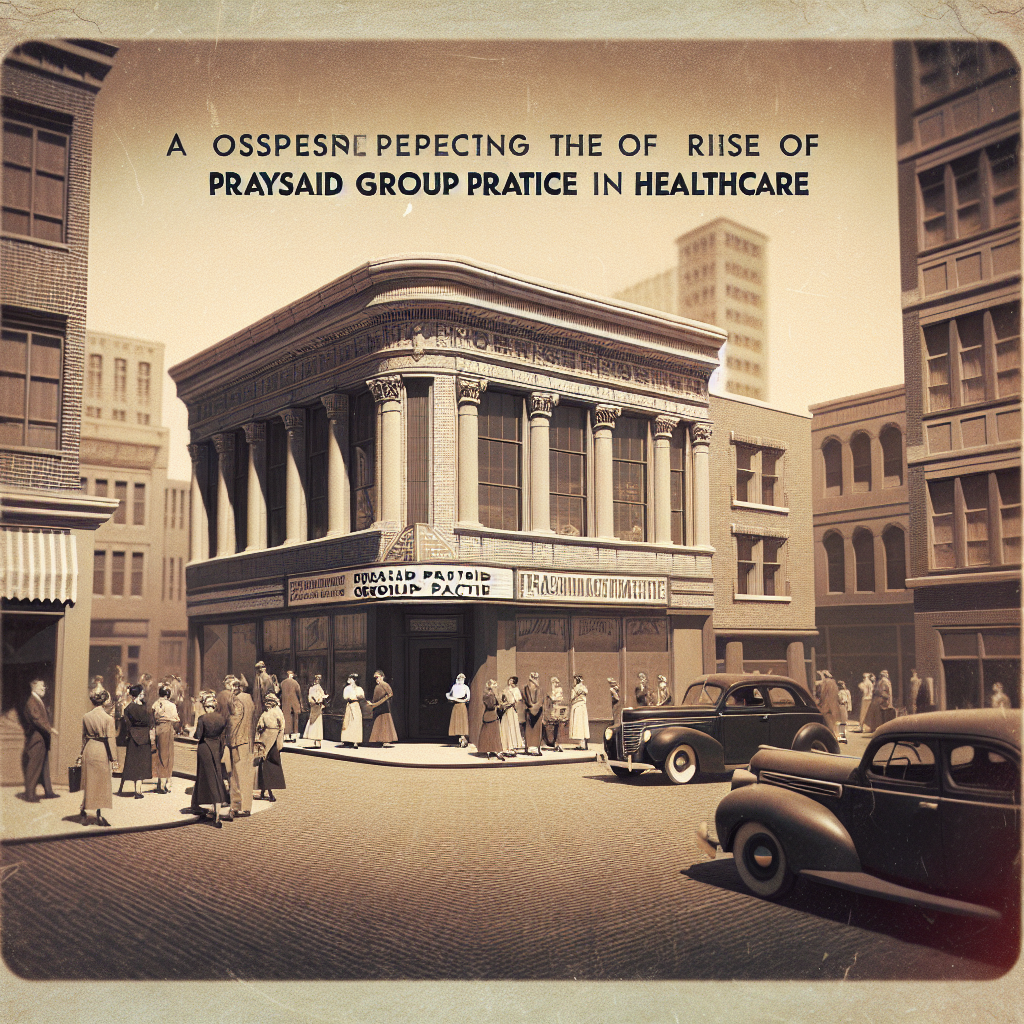
In 1942, as Liberty ships rolled off Henry Kaiser's Richmond, California shipyards at a pace that amazed the world, a quiet revolution was taking place in a series of modest medical buildings nearby. Dr. Sidney Garfield, a young physician with an unconventional idea, was treating Kaiser's 90,000 shipyard workers under a radical new system that would fundamentally reshape American healthcare—though few realized it at the time.
The story begins not in the shipyards, but in the Mojave Desert a decade earlier. In 1933, fresh out of medical school and nearly broke, Garfield had set up practice to treat construction workers building the Colorado River Aqueduct. The work was dangerous, the desert was brutal, and traditional fee-for-service medicine wasn't working. Workers couldn't afford care when they needed it, and doctors couldn't collect payment from transient laborers who might disappear when projects ended.
Garfield's solution was elegantly simple: instead of charging workers after they got hurt, why not collect a small amount from each worker's paycheck before anything happened? For five cents a day per worker, he would provide all the medical care they needed. Insurance companies balked at first—they wanted to cover only serious accidents, not routine care. But Garfield insisted on something unprecedented: comprehensive coverage that included preventive medicine.
The Kaiser Connection
When Henry Kaiser began his massive shipbuilding operation on the West Coast, he faced a familiar problem. His workforce had swelled from a few thousand to nearly 200,000 workers across multiple shipyards, many in remote locations far from adequate medical facilities. Industrial accidents were common, and keeping workers healthy was essential to meeting wartime production quotas.
Kaiser remembered the young doctor who had successfully managed healthcare for his earlier construction projects. In 1942, he invited Garfield to create a comprehensive medical program for the shipyard workers. What emerged was something entirely new in American medicine: a prepaid group practice that hired doctors and nurses to work collaboratively in a system that successfully met members' needs through integrated care delivery.
The model was revolutionary in several ways. Instead of individual doctors working in isolation, Garfield assembled teams of physicians, specialists, and nurses who collaborated on patient care. Rather than treating illness after it occurred, the system emphasized prevention and early intervention. Most radically, instead of the traditional fee-for-service model where doctors were paid for each procedure, physicians received salaries and were incentivized to keep patients healthy, not to perform more treatments.
Wartime Innovation
The timing couldn't have been better—or more challenging. Wartime labor shortages meant that keeping workers healthy and on the job was a national priority. The federal government, normally resistant to healthcare innovation, actively supported programs that boosted war production. Kaiser's workers, many of whom had never had reliable access to medical care, embraced a system that provided comprehensive coverage for a small payroll deduction.
But the real innovation wasn't just in financing—it was in delivery. Garfield's medical centers were designed around efficiency and coordination. Patients could see multiple specialists in one visit, get lab work and X-rays on-site, and have their care coordinated by a team that shared medical records and communicated regularly. It was a stark contrast to the fragmented, episodic care that characterized most of American medicine.
The results were impressive. Industrial accident rates dropped significantly, worker satisfaction was high, and the system proved financially sustainable. By 1945, Garfield's program was serving nearly 200,000 people across Kaiser's various enterprises. Word began to spread through medical and business circles about this unusual experiment in prepaid group practice.
Beyond the Shipyards
As World War II ended and shipyard employment plummeted, many expected Garfield's experiment to end with it. Instead, something unexpected happened: workers who had experienced this new kind of healthcare didn't want to give it up. They petitioned to continue their membership even after leaving Kaiser's employ. In 1945, the program opened to the general public, and this approach formed the foundation of Kaiser Permanente's evolution into a major integrated health system.
The transition wasn't smooth. The American Medical Association viewed prepaid group practice with deep suspicion, seeing it as a threat to physician independence and the traditional doctor-patient relationship. Many doctors refused to work in such systems, preferring the autonomy and potentially higher earnings of private practice. Some state medical boards attempted to restrict or ban prepaid plans altogether.
But the model had proven its worth during the war, and it continued to attract both patients and forward-thinking physicians who believed in its potential. By 1950, Kaiser Permanente was serving over 150,000 members in California and had begun expanding to other states.
The Seeds of Modern Healthcare
Looking back, it's remarkable how many elements of today's healthcare system trace their roots to those modest medical buildings near Kaiser's shipyards. The emphasis on preventive care, the use of medical teams rather than individual practitioners, the integration of specialists and primary care, the focus on keeping patients healthy rather than simply treating disease—all of these innovations emerged from Garfield's wartime experiment.
Even more significantly, the basic economic model—prepaid, comprehensive coverage provided through employment—became the template for employer-sponsored health insurance that would dominate American healthcare for decades. The managed care revolution of the 1980s and 1990s, the current emphasis on accountable care organizations, and ongoing efforts to control healthcare costs all echo principles that Garfield pioneered in the 1940s.
What began as a practical solution to providing medical care for shipyard workers became a blueprint for reimagining American healthcare. In those crucial years of the 1940s, while the world's attention was focused on battles overseas, a quiet revolution in medicine was taking shape in California—one whose influence we still feel today.