When Companies Started Bribing Workers with Health Insurance
The post-war job boom of the late 1940s accidentally created America's employer-based healthcare system when desperate companies used benefits to compete for scarce workers.

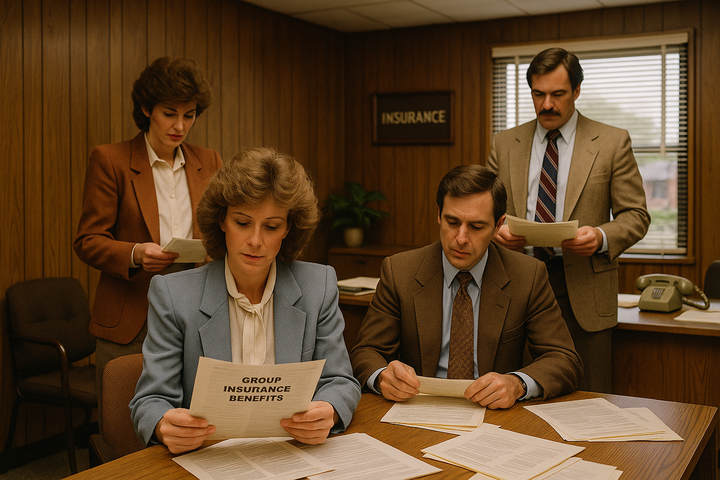
Picture this: It's 1947, and a factory owner in Detroit is literally begging people to come work for him. Not with higher wages—those are still controlled by federal regulations—but with something almost unheard of just a few years earlier: free health insurance. What started as a desperate recruiting tactic would accidentally reshape American healthcare forever.
The late 1940s created a perfect storm that would fundamentally alter how Americans get their health coverage. After years of wartime controls, millions of servicemen were flooding back into civilian life, but they weren't just taking any job. Meanwhile, American industry was retooling from tanks and bombers to cars and refrigerators, creating an explosion of new opportunities. The result? The tightest labor market in American history.
The Wage Control Loophole That Changed Everything
Here's where the story gets interesting. The federal government was still maintaining wartime wage controls well into 1946, making it illegal for companies to simply offer higher salaries to attract workers. But there was a loophole—and it was a big one. Benefits didn't count as wages.
Smart employers quickly figured out they could offer health insurance, pensions, and other perks without running afoul of federal regulators. What had once been rare executive privileges suddenly became recruitment weapons in the battle for workers. A 1947 survey found that companies offering health benefits could fill positions 40% faster than those relying on wages alone.
The competition was fierce. General Motors didn't just offer basic medical coverage—they threw in dental care and vision benefits. Smaller manufacturers countered with fully paid premiums and coverage for entire families. It was an arms race fought with benefit packages instead of bullets.
Labor Unions Smell Opportunity
Labor leaders were initially skeptical. Why fight for benefits when you could fight for cold, hard cash? But union negotiators quickly realized that tax-free health benefits could be worth more to workers than equivalent wage increases. A dollar spent on health insurance went further than a dollar in taxable wages.
The United Auto Workers led the charge, making health benefits a central demand in their landmark 1946 strike against General Motors. When they won comprehensive medical coverage for 400,000 workers, other unions took notice. Suddenly, every major labor negotiation included heated discussions about hospital coverage and surgical benefits.
Walter Reuther, the UAW's president, would later call it 'the most important victory for American workers since the eight-hour day.' He had no idea he was helping create a system that would tie Americans' health coverage to their jobs for the next eight decades.
The Accidental Architecture of Modern Healthcare
What makes this story so fascinating is how accidental it all was. Nobody sat down and decided that employers should provide health insurance. It just happened because companies were desperate for workers and the government had inadvertently made benefits more attractive than wages.
The numbers tell the story. In 1940, fewer than 12 million Americans had any kind of health insurance. By 1950, that number had exploded to over 77 million—most of them covered through their jobs. The employer-based system we know today wasn't the result of careful policy planning. It was born from post-war labor competition.
Insurance companies, initially caught off guard by the sudden demand, scrambled to create group policies for employers. Blue Cross plans, which had been small regional experiments, suddenly found themselves negotiating with major corporations. Commercial insurers jumped in, offering competing plans and driving innovation in coverage options.
The Seeds of Today's System
Sound familiar? Recent analysis shows that today's tight labor market is driving similar benefits competition, with healthcare costs projected to rise 9% as companies compete for scarce talent. The same dynamics that created employer-based insurance in the 1940s—worker shortages, wage pressures, and benefits competition—are still shaping how Americans get their healthcare coverage today.
By 1948, when wage controls were finally lifted, it was too late. The die was cast. Companies had discovered that benefits were powerful retention tools, workers had grown accustomed to employer-provided coverage, and the insurance industry had built an entire business model around group policies.
What started as a temporary workaround to federal wage controls had become the foundation of American healthcare financing. The post-war employment boom didn't just rebuild the American economy—it accidentally created a healthcare system that would define the American experience for generations to come.
Today, as we debate healthcare reform and wonder why American health insurance is so different from other countries, the answer lies in those frantic post-war years when desperate employers started bribing workers with benefits they never expected to become permanent fixtures of American life.