When GIs Came Home and Sparked the Benefits Revolution
The massive post-war employment boom of the late 1940s created unprecedented competition for workers, launching the golden age of employee benefits that transformed American healthcare forever.
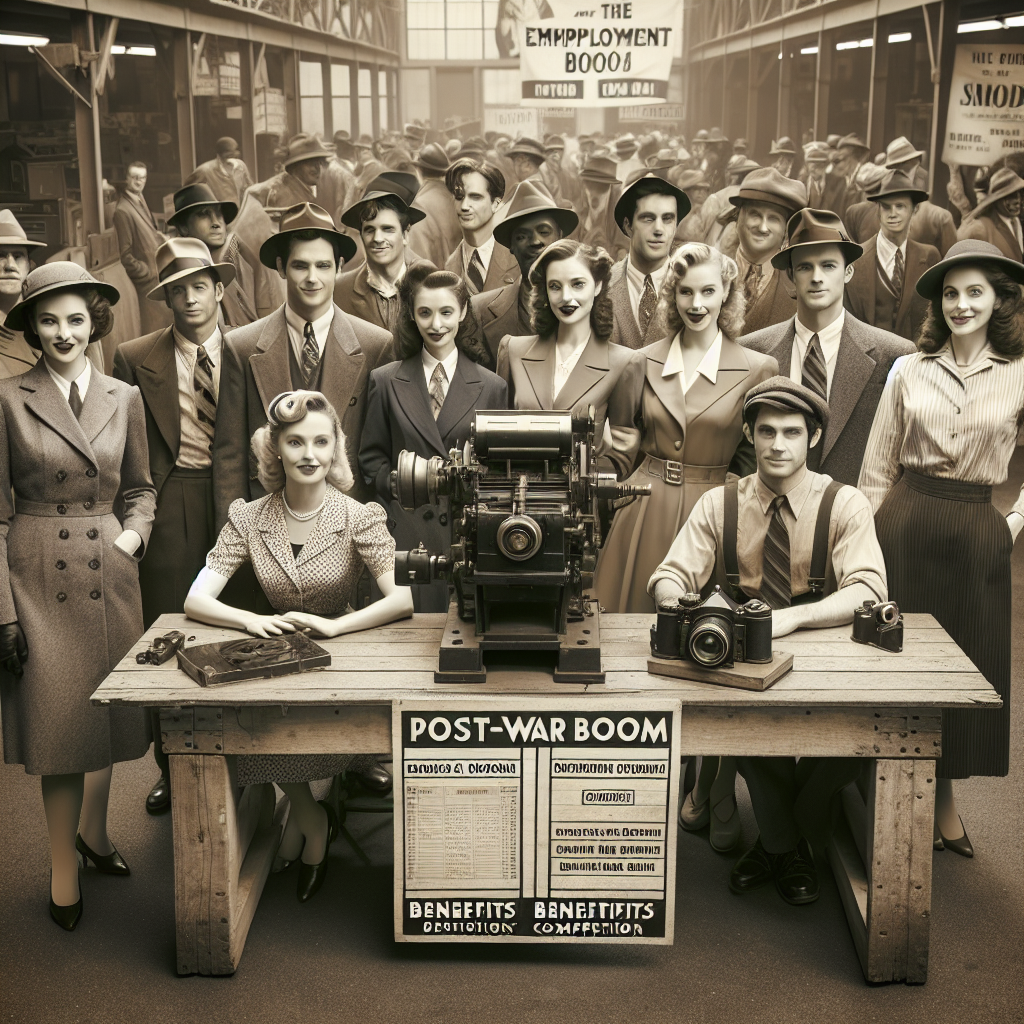
Picture this: It's 1946, and 12 million American servicemen are streaming back from the battlefields of Europe and the Pacific. Meanwhile, factories that had been churning out tanks and bombers suddenly needed to find new purposes—and new workers. What happened next would accidentally create the foundation of modern American healthcare benefits, all because employers got desperate to find good people.
The numbers tell an extraordinary story. By 1947, unemployment had dropped to just 3.9%, and employers found themselves in a bidding war for talent unlike anything America had ever seen. But here's where it gets interesting: they couldn't just throw money at the problem.
The Wage Freeze Legacy That Changed Everything
During the war, the federal government had frozen wages to control inflation, but they'd made a clever exception: employee benefits didn't count as wages. This seemingly small policy decision created a pathway that smart employers began exploiting in creative ways. When the wage controls lifted after the war, the benefits competition had already begun—and employers discovered that workers really liked these new perks.
Companies that had never offered anything beyond a paycheck suddenly found themselves pioneering comprehensive benefit packages. Health insurance, which had barely existed before the war, became a powerful recruiting tool. Pension plans, once reserved for white-collar executives, started appearing in union contracts across heavy industry.
The Manufacturing Boom That Built Middle America
The Oxford University Press research reveals just how transformative this period was: men born in counties where wartime plants were built earned 2.5% more annually throughout their entire working lives, with family earnings jumping 5-10% over the following four decades. This wasn't just about immediate post-war prosperity—it was about fundamentally reshaping American economic opportunity.
What made this possible was a perfect storm of favorable conditions. American factories faced virtually no international competition—Europe and Asia were rebuilding from rubble. Global demand for American goods seemed limitless. Labor unions, strengthened by wartime cooperation, had real bargaining power. And perhaps most importantly, the technology of the era was still labor-intensive, meaning companies needed lots of skilled workers and were willing to pay to keep them.
Take a company like Kaiser Shipbuilding, which had pioneered comprehensive healthcare coverage for its wartime workforce. When the war ended, Henry Kaiser didn't abandon the program—he expanded it. The Kaiser Permanente health plan, born from wartime necessity, became a model that other employers rushed to copy. Suddenly, offering health insurance wasn't just generous; it was competitive strategy.
When Benefits Became the New Battleground
By 1948, the benefits arms race was in full swing. Companies began offering increasingly creative packages: dental coverage, vision care, life insurance, and retirement plans that would have seemed impossibly generous just a decade earlier. What had started as a wartime expedient had evolved into a comprehensive system of workplace-based social insurance.
The unions played a crucial role in this transformation. Walter Reuther and the United Auto Workers didn't just negotiate for higher wages—they demanded that Ford, General Motors, and Chrysler provide security for workers' families. The landmark 1949 steel industry settlement included employer-paid health insurance and pensions, setting a template that rippled across American industry.
This wasn't happening in isolation. The GI Bill was sending millions of veterans to college, creating a more educated workforce with higher expectations. Suburbanization was creating new lifestyle aspirations that required steady, well-paying jobs with security. Employee benefits became the bridge between wartime solidarity and peacetime prosperity.
The Accidental Architecture of American Healthcare
What's remarkable is how unplanned this transformation was. Nobody in 1946 sat down and decided that American healthcare should be primarily employer-based. It emerged organically from the collision of post-war labor shortages, existing tax policies, and innovative employers trying to solve immediate recruiting problems.
The tax advantages were significant but initially underappreciated. Employer-provided health insurance was tax-free to employees but tax-deductible for companies—a powerful incentive that made benefits more valuable than equivalent cash wages. Smart benefits managers began calculating that a dollar spent on health insurance could be worth $1.30 or more to an employee in a high tax bracket.
By 1950, the system that would define American healthcare for the next seven decades was essentially in place. Employer-sponsored health insurance covered 20 million Americans, up from virtually zero a decade earlier. The post-war employment boom hadn't just created jobs—it had created an entirely new social contract.
Today, as we debate healthcare reform and gig economy benefits, we're still living with the consequences of those desperate post-war hiring decisions. The system that emerged from 1940s labor shortages—employer-sponsored health insurance, workplace retirement plans, and comprehensive benefits packages—remains the backbone of middle-class economic security. What began as a creative solution to post-war staffing challenges accidentally became the foundation of the American Dream itself.