When Workers First Fought for Their Rights: The Birth of Labor Protections
In the 1800s, pioneering labor activists transformed workplace safety, creating the first organized movements to protect workers from dangerous industrial conditions and exploitation.
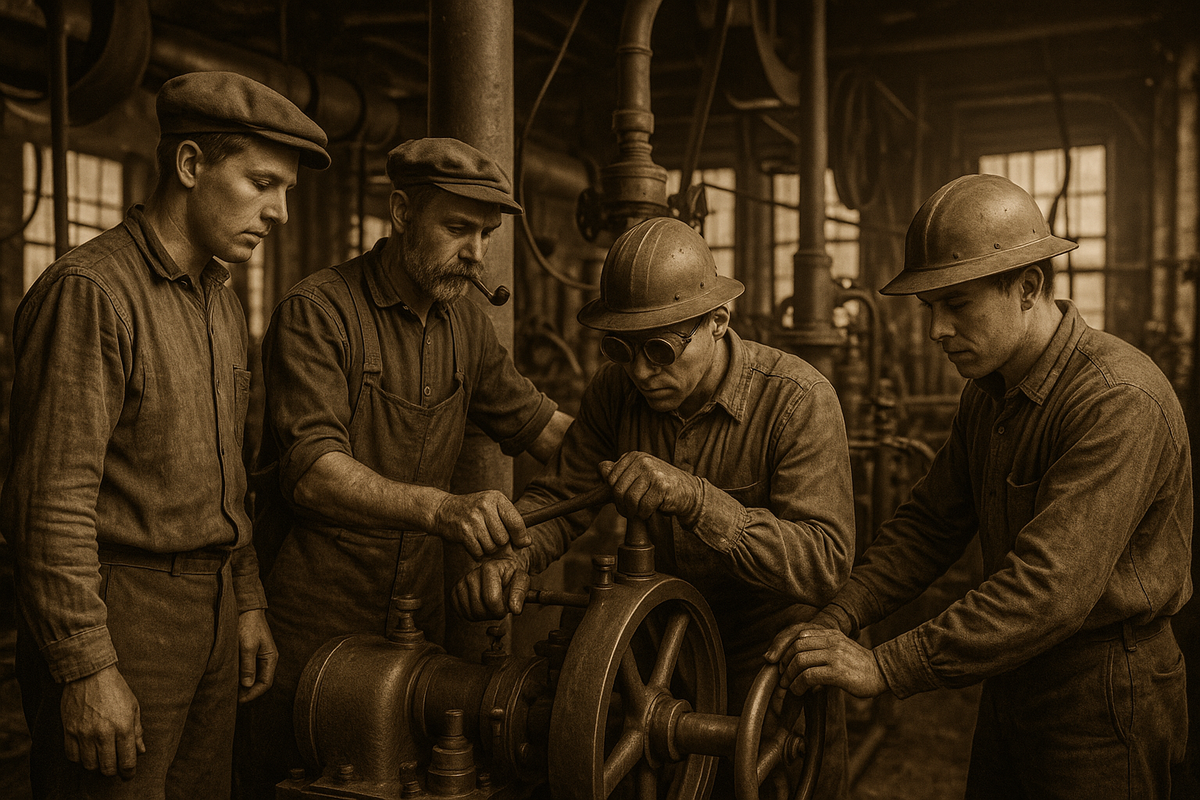
Picture this: It's 1827, and the American Industrial Revolution is just beginning to transform the nation. Steam-powered machinery is replacing hand tools, factories are sprouting up along rivers and canals, and thousands of workers are leaving farms to seek their fortunes in the bustling mill towns of New England. But in the textile mills of Lowell, Massachusetts, something unprecedented is happening—skilled craftsmen are banding together to form the first labor union in American history.
These pioneering workers weren't just seeking higher wages. They were fighting for something far more fundamental: the right to safe working conditions, reasonable hours, and basic human dignity in the workplace. What began as small groups of carpenters, shoemakers, and textile workers organizing for better treatment would evolve into a powerful movement that would transform American labor relations forever.
For the skilled workers who would eventually build the aerospace and manufacturing industries across Nassau and Suffolk Counties, these early labor activists were laying the groundwork for the workplace protections and employee rights that modern Long Island employers and workers rely on today.
The Birth of Industrial America and Its Dangers
The 1820s and 1830s marked a dramatic transformation in how Americans worked and lived. The shift from agricultural and artisanal production to factory-based manufacturing created unprecedented opportunities for employment, but it also generated workplace hazards and labor conditions that were often brutal and dehumanizing.
In the textile mills that powered early American industrialization, workers—many of them young women—labored 12 to 14 hours a day in poorly ventilated buildings filled with dangerous machinery. Factory floors were slippery with oil, lighting was inadequate, and safety guards on equipment were virtually nonexistent. Workers regularly lost fingers, hands, and sometimes their lives to unprotected gears, belts, and pulleys.
The situation was even worse in emerging heavy industries. Iron foundries and early manufacturing plants subjected workers to extreme heat, toxic fumes, and crushing physical demands with no consideration for human limitations. A typical workday began before dawn and ended after dark, six days a week, with no paid vacations, sick leave, or compensation for workplace injuries.
What made these conditions particularly egregious was the complete lack of worker recourse. Individual employees who complained about dangerous conditions or excessive hours were simply fired and replaced. The power imbalance between employers and workers was so extreme that most people accepted terrible working conditions as an inevitable part of industrial progress.
The Spark of Collective Action
The breakthrough came when skilled craftsmen realized that their individual powerlessness could be overcome through collective organization. In 1827, the Philadelphia Mechanics' Union of Trade Associations became the first citywide labor federation in American history, bringing together carpenters, shoemakers, tailors, and other skilled workers under a common banner.
These early unions weren't fighting just for economic gains—they were advocating for fundamental changes in how American society viewed the relationship between employers and workers. The Department of Labor's historical analysis shows that these pioneering labor organizations established crucial principles that would influence worker protection efforts for generations.
The eight-hour workday became their rallying cry, but it represented something much larger than a simple reduction in working hours. It embodied the radical idea that workers were human beings with lives, families, and needs beyond their economic productivity. The slogan "Eight hours for work, eight hours for rest, eight hours for what we will" captured a vision of balanced human existence that challenged the prevailing industrial mindset.
These early labor activists also pioneered the concept of workplace safety as a worker right rather than an employer privilege. They argued that no job was worth risking life and limb, and that employers had moral and practical obligations to provide safe working conditions for their employees.
The National Labor Union and Expanding Influence
The momentum created by local labor organizations culminated in 1866 with the formation of the National Labor Union, the first attempt to create a nationwide federation of American workers. This historic gathering in Baltimore brought together representatives from across the country to address the growing challenges facing industrial workers.
The National Labor Union's platform was remarkably progressive for its era. Beyond the eight-hour workday, they advocated for equal pay for equal work regardless of gender or race, workplace safety regulations, and the right of workers to organize without employer retaliation. These demands seem basic today, but they were revolutionary concepts in post-Civil War America.
The organization also recognized that worker protection required political as well as economic action. They lobbied for legislation that would establish basic workplace safety standards, limit working hours for women and children, and create mechanisms for resolving labor disputes without violence or economic warfare.
While the National Labor Union itself was relatively short-lived, dissolving in the 1870s, it established crucial precedents for worker organization and advocacy that would influence American labor relations for decades to come.
Early Industrial Development and Long Island
While the most dramatic early labor organizing occurred in the established industrial centers of New England and the Mid-Atlantic states, the principles and protections that these movements established would prove crucial for Long Island's economic development in the decades that followed.
As Nassau and Suffolk Counties began attracting manufacturing and emerging industrial employers in the late 19th and early 20th centuries, the region inherited the labor relations framework that earlier activists had fought to establish. The concept of collective worker organization, workplace safety standards, and reasonable working hours had become accepted parts of American industrial culture.
The skilled craftsmen and technical workers who would eventually build Long Island's aerospace industry at companies like Grumman Aircraft and Republic Aviation benefited directly from the workplace protections that 1800s labor activists had pioneered. The eight-hour workday, safety regulations, and workers' rights to organize had become standard expectations rather than radical demands.
Long Island's industrial development also demonstrated how early labor protections supported rather than hindered economic growth. Companies that offered good working conditions and respected worker rights often found it easier to attract skilled employees and maintain stable workforces, creating competitive advantages that supported long-term business success.
The Philosophy of Worker Rights
What made the 1800s labor movement truly transformative wasn't just its specific demands for shorter hours or safer working conditions—it was the fundamental shift in thinking about the relationship between employers and workers that these activists pioneered.
Before the labor movement, most Americans accepted the idea that employers had nearly unlimited authority over their workers during working hours. The employment relationship was viewed as a simple contract: workers sold their time and effort in exchange for wages, and employers could structure that time however they saw fit.
Labor activists challenged this framework by arguing that workers retained basic human rights even during working hours. They couldn't be subjected to dangerous conditions, excessive hours, or degrading treatment simply because they needed employment. This represented a fundamental reconceptualization of industrial work from a purely economic transaction to a human relationship with moral dimensions.
The movement also established the principle that workers had legitimate interests in workplace decisions that affected their safety, health, and well-being. Rather than being passive recipients of employer decisions, workers had the right to participate in discussions about working conditions and to organize collectively to advocate for their interests.
Transformative Principles That Endure
The early labor movement established several key principles that continue to influence American workplace relations today:
- Collective organization: Individual workers could overcome power imbalances with employers by organizing together and speaking with a unified voice
- Workplace safety as a right: Employers had obligations to provide reasonably safe working conditions, not just legal minimum standards
- Work-life balance: Workers were entitled to time for rest, family, and personal development beyond their economic productivity
- Equal treatment: All workers deserved basic protections and fair treatment regardless of their individual circumstances
These principles laid the groundwork for virtually every workplace protection that modern American workers enjoy, from overtime pay and safety regulations to anti-discrimination laws and family leave policies.
Modern Relevance for Long Island Employers
For Long Island employers today, the history of early labor activism provides important context for understanding modern NY Labor Laws and Workplace Regulations. The workplace protections that contemporary businesses must navigate—from wage and hour requirements to safety standards—trace their origins directly back to the organizing efforts of 1800s workers.
The early labor movement's emphasis on workplace safety and reasonable working conditions remains particularly relevant for companies across Nassau and Suffolk Counties. Just as 19th-century activists argued that no job was worth risking life and health, modern employers who prioritize worker safety often find competitive advantages in terms of reduced insurance costs, lower turnover, and enhanced reputation.
The collective organization principles that early labor activists pioneered also continue to influence contemporary employee relations. Even in non-union workplaces, successful employers often find that listening to worker concerns and involving employees in workplace decisions creates more productive and stable work environments.
The movement's focus on work-life balance has evolved into modern concepts like flexible scheduling, paid time off, and family-friendly policies that help employers attract and retain skilled workers in competitive labor markets.
Lessons for Today's Business Leaders
The story of early labor activism offers valuable insights for contemporary business leaders navigating employee relations and workplace culture challenges. The movement's success demonstrates that addressing worker concerns proactively often creates better outcomes for both employers and employees than waiting for problems to escalate into conflicts.
The emphasis on workplace safety that early labor activists championed provides a model for modern approaches to employee well-being. Companies that invest in comprehensive safety programs, ergonomic improvements, and health promotion often see returns that extend far beyond regulatory compliance, including improved productivity, reduced absenteeism, and enhanced employee satisfaction.
The early labor movement's focus on fair treatment and equal opportunity also offers lessons for contemporary diversity and inclusion efforts. Just as 19th-century activists argued that all workers deserved basic protections regardless of their individual characteristics, modern employers who embrace inclusive workplace cultures often find competitive advantages in their ability to attract diverse talent and serve diverse markets.
For today's Long Island employers, the 1800s experience suggests that viewing employee relations as partnerships rather than simple transactions creates value for all stakeholders. Companies that demonstrate genuine concern for worker well-being and involve employees in workplace decisions often achieve the loyalty and productivity that early labor activists sought through collective organization.
Building on Historical Foundations
As Nassau and Suffolk Counties continue to evolve economically, with new industries emerging alongside traditional manufacturing and aerospace employers, the principles established by early labor activists remain highly relevant. The emphasis on workplace safety, fair treatment, and worker participation provides a framework for addressing contemporary employment challenges.
Modern workplace issues—from ergonomic hazards in office environments to mental health challenges in high-stress jobs—require the same innovative thinking that led to the eight-hour workday movement. The most successful approaches often combine regulatory compliance with proactive investment in worker well-being and safety culture development.
The early labor movement's success also illustrates the importance of viewing employee relations as long-term relationships rather than short-term transactions. Companies that invest in their workers' development, safety, and satisfaction often achieve the stability and loyalty that 19th-century employers learned to value through sometimes painful experience with labor conflicts.
Today's employers can apply the systematic approach that early labor activists used to identify and address workplace problems. Just as these pioneers recognized that individual grievances often reflected broader systemic issues, modern businesses can use employee feedback and engagement data to identify opportunities for workplace improvements that benefit everyone.
The historical success of labor activism also demonstrates the value of addressing employee concerns before they become major problems. Employers who listen to worker feedback and make proactive improvements often prevent the kinds of conflicts that disrupted production and damaged relationships in the early industrial era.
The legacy of 1800s labor activism continues to influence how American employers think about their relationships with workers. The shift from viewing employees as simple factors of production to recognizing them as human beings with legitimate interests and rights has evolved into contemporary concepts like employee engagement, talent development, and human capital management—all of which build upon the fundamental insights that early labor activists fought to establish.
Ready to build on the strong historical foundation of worker protection by developing comprehensive employee relations programs that honor both worker rights and business objectives? Contact Benton Oakfield today to discuss how expert guidance can help you navigate modern HR strategy and policy development while creating workplace cultures that reflect the best traditions of fair treatment, safety, and mutual respect that early labor activists fought to establish.
This article is for informational purposes only and does not constitute legal or tax advice. Consult with qualified professionals for guidance specific to your situation.